
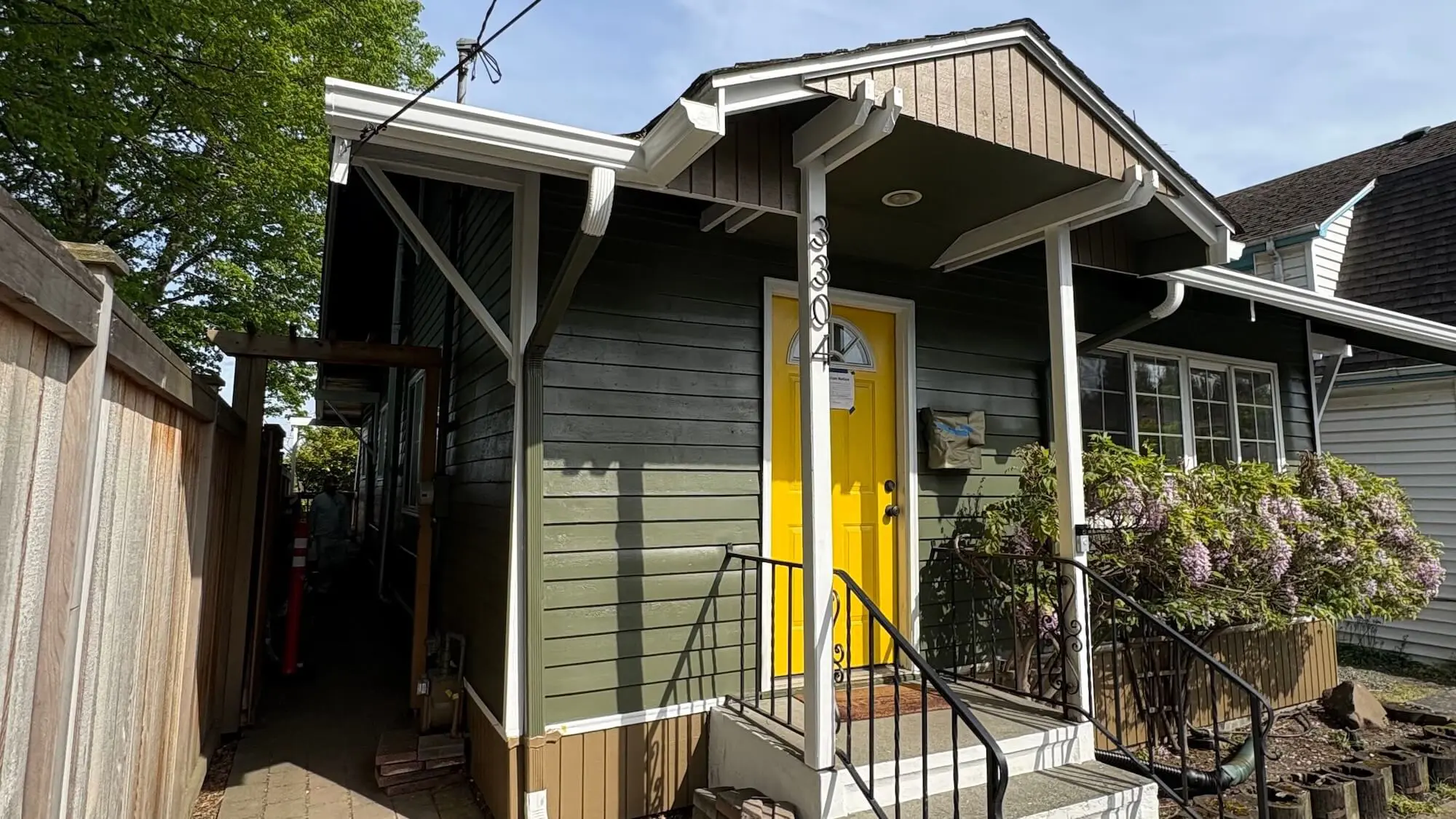
The Before
Drive past a house where the paint has started curling off the siding in long strips and you can read the story from the sidewalk. That's what this one looked like. Green siding, a yellow front door, and a south-facing wall that had clearly taken the worst of it.
South-facing walls in Seattle get an unfair deal. They catch the low winter sun, the summer heat, and the wind-driven rain off the Sound, all from the same direction, year after year. Paint on that side gives out first. On this home it had lifted in wide patches, gone chalky along the trim edges, and pulled away from the seams where water had been finding its way behind the film.
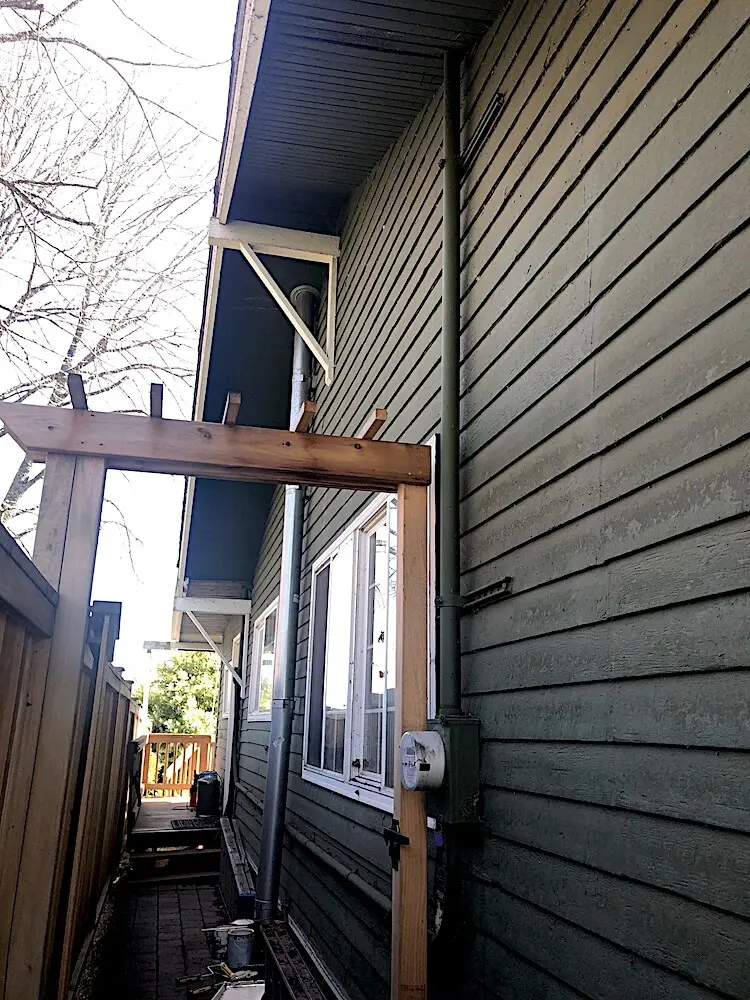
The gutters, downspouts, and conduits had faded out of step with the body color, so even the sections still holding paint looked tired next to each other.
None of it was catastrophic. It was the ordinary result of a coating reaching the end of its service life on an older home, which is exactly when most people start noticing. The trouble is that the homeowners weren't noticing it on a normal timeline. They were getting ready to move, and the house was going on the market.
That changes what peeling paint means. On a house you're staying in, worn siding is a maintenance item you get to a season or two from now. On a house you're listing, it's the first thing a buyer sees in the photos and the first thing they see when they pull up to the curb. Buyers read a rough exterior as deferred maintenance and start wondering what else got put off. Fair or not, that's the read.
So the starting point here wasn't a paint problem. It was a timing problem with a paint problem inside it.
The Problem
The scope itself was straightforward: a full exterior repaint, top to bottom, on an older Seattle home. Three things sitting around that scope made it more complicated than the average repaint.
The home's age put it under lead-safe requirements.
Homes built before 1978 can carry lead-based paint under later coats, and any work that disturbs those surfaces has to follow lead-safe work practices. Scraping and sanding are exactly the kind of disturbance that matters. This isn't a formality you can skip because the coating on top looks modern. It affects how the site gets set up, how prep gets done, how debris gets contained, and how the property gets cleaned at the end of each day. It adds real steps to the job, and skipping them puts a household and a neighborhood at risk.
An easement wall was shared with the neighbor.
One section of the property sat on a shared easement, which meant access to that wall wasn't a straight yes. Ladder placement, staging, drop cloths, and containment all had to account for a boundary that belonged to two households instead of one. Get that wrong and you've either damaged something that isn't yours to damage or you've left a wall half finished because you couldn't reach it. Neither one is a good outcome when the house is about to be photographed.
The homeowners were out of town for parts of the project.
They weren't going to be standing in the driveway to answer questions. Access had to be arranged in advance, decisions had to be settled before they left, and progress had to reach them without them having to chase anyone for it. Communication stopped being a courtesy on this job and became part of the work itself.
Stack those together and you get the real problem: a full repaint that had to hit a hard listing deadline, follow a slower and more controlled prep process, work around a boundary the homeowners didn't fully control, and run reliably while the people who lived there were somewhere else.
Any one of those on its own is manageable. Together they're the reason a job like this needs a plan before it needs a paintbrush.
The Solution
Prep drove this project, and prep is where the lead-safe requirements landed hardest.
The crew worked through scraping, spot priming, pressure washing, containment, and daily cleanup as a single controlled sequence rather than a set of separate tasks. Loose and failing paint came off first, with debris contained rather than left to scatter across the yard, the walkway, or the neighbor's side of the easement. Bare and questionable areas were spot primed so the topcoat had something sound to bond to. Pressure washing cleared the chalking, dirt, and mildew that build up on Seattle siding and that will quietly wreck adhesion if you coat over them. Cleanup happened as the work went, not as a single push at the end.
That order matters more than the paint that follows it. A premium coating applied over loose material fails on the schedule of the loose material underneath it, not on the schedule printed on the can. On a house being listed in weeks, a coating that starts lifting the following summer becomes the new owner's problem and, eventually, the seller's reputation.
Sherwin-Williams SuperPaint Exterior went on as the finish. The body color was matched to the home's existing green rather than pulled from a new palette, with SW 6181 Secret Garden carried on the work order as the reference point and "match existing" as the color direction. The front door was matched to its existing yellow, which had no documented color code, so it was matched off the surface itself.
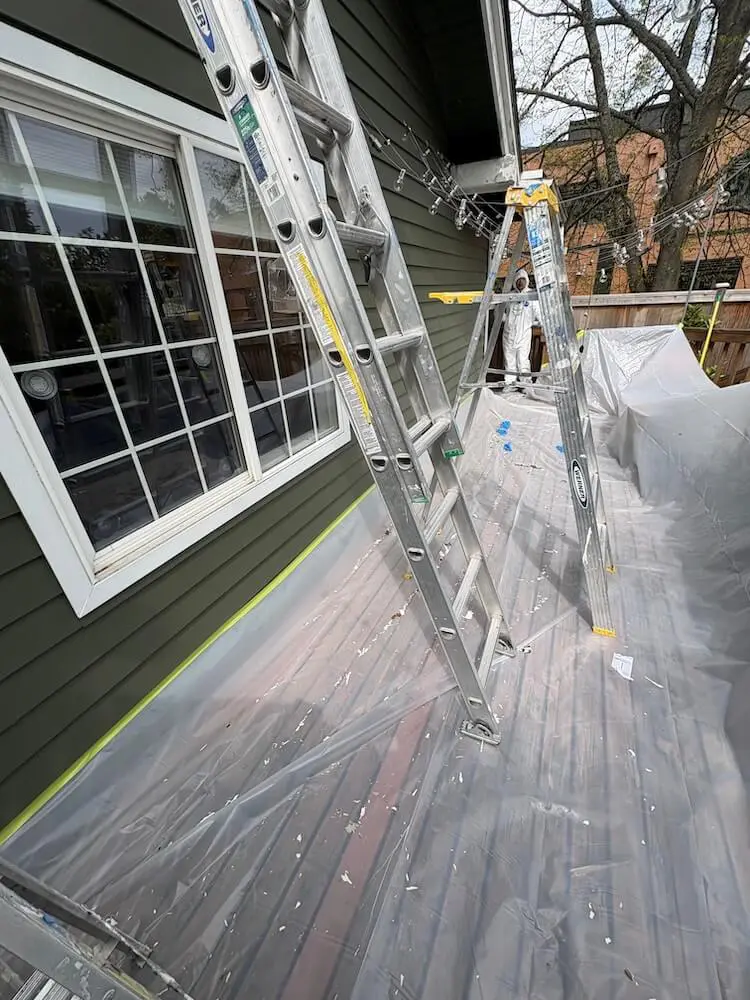
Coverage ran the full exterior rather than the obvious faces:
- Siding
- Soffits and fascia
- Window and door frames
- Downspouts and gutters
- Front door
- Steps
- Conduits
- Columns
- Trim details
Conduits, downspouts, and the small trim details are the pieces that get skipped on a fast job, and they're the pieces that give a repaint away. A wall can be flawless, but if the downspout running down it is still faded and the conduit beside it is chipped, the eye catches the mismatch before it catches the new siding. Painting them brings the whole elevation back into one visual piece.
Weather set the pace underneath all of it. Spring in the Puget Sound region gives you working windows rather than working weeks, and exterior coatings need dry surfaces and temperatures holding above the product's minimum to cure the way they're supposed to. Wash a wall and you're waiting on it to dry through, not just dry to the touch, before anything goes over it. Push that and you trap moisture behind a fresh film, which is how a brand new paint job starts blistering in its first warm stretch. Scheduling around the forecast, rather than around a preferred finish date, is what let this one hit May 4 without cutting the parts of the process that actually determine how long the finish lasts.
The easement wall was handled by planning access before staging, not by improvising once the ladders were out. The out-of-town stretches were handled by settling color direction and scope up front, then keeping the homeowners updated so they could stay where they were without wondering what was happening at their house.
Before & After
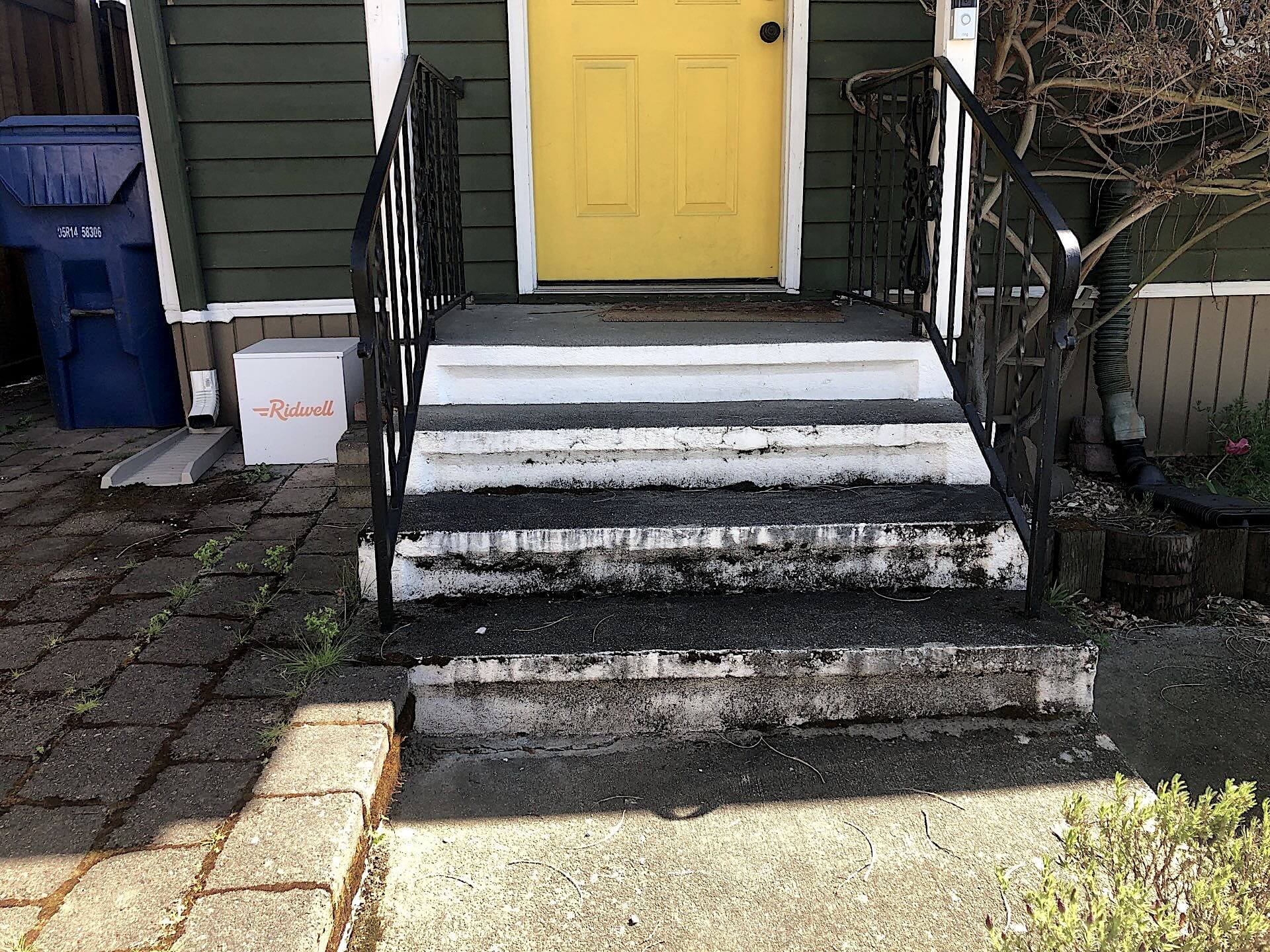
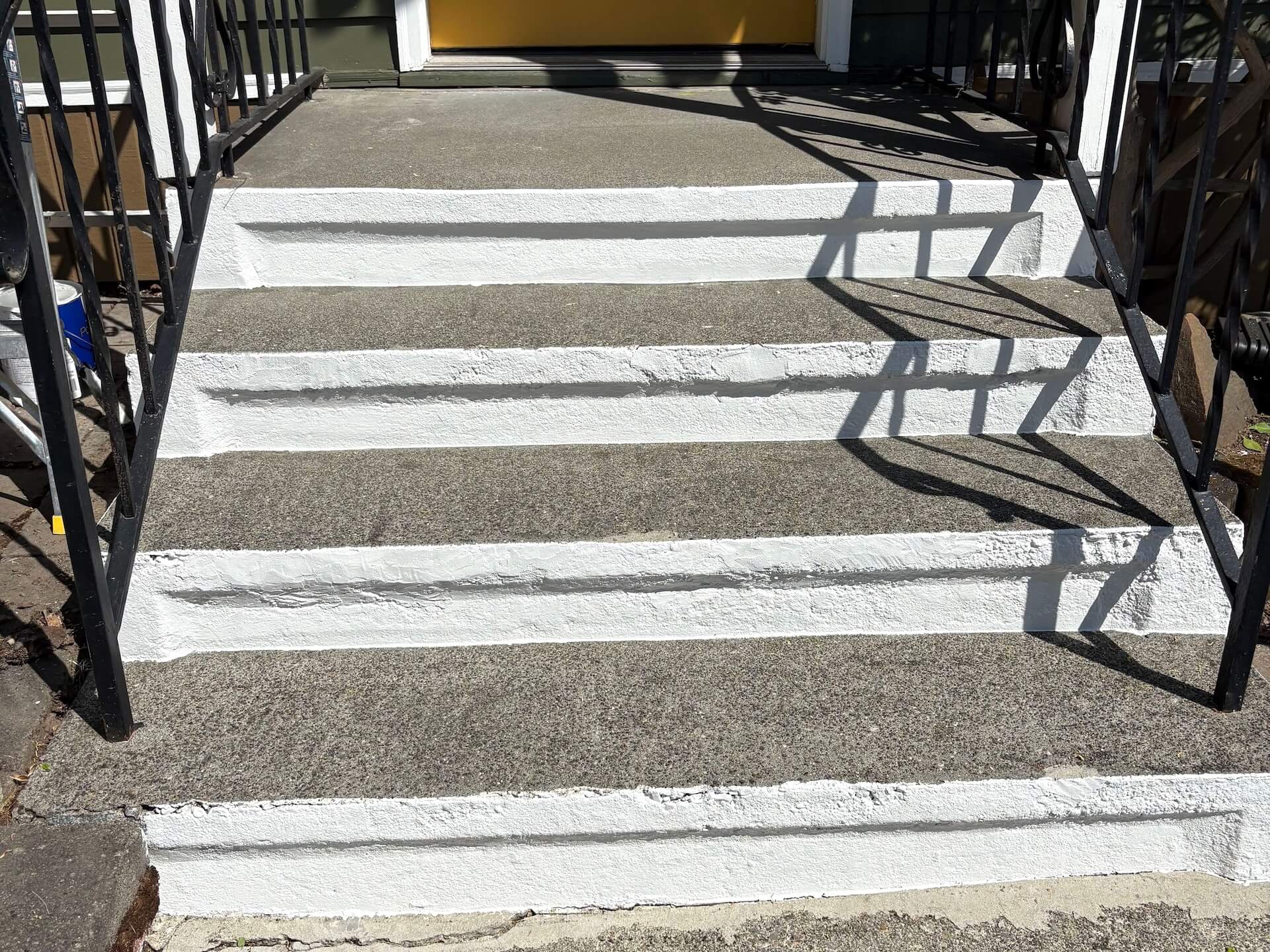
The After
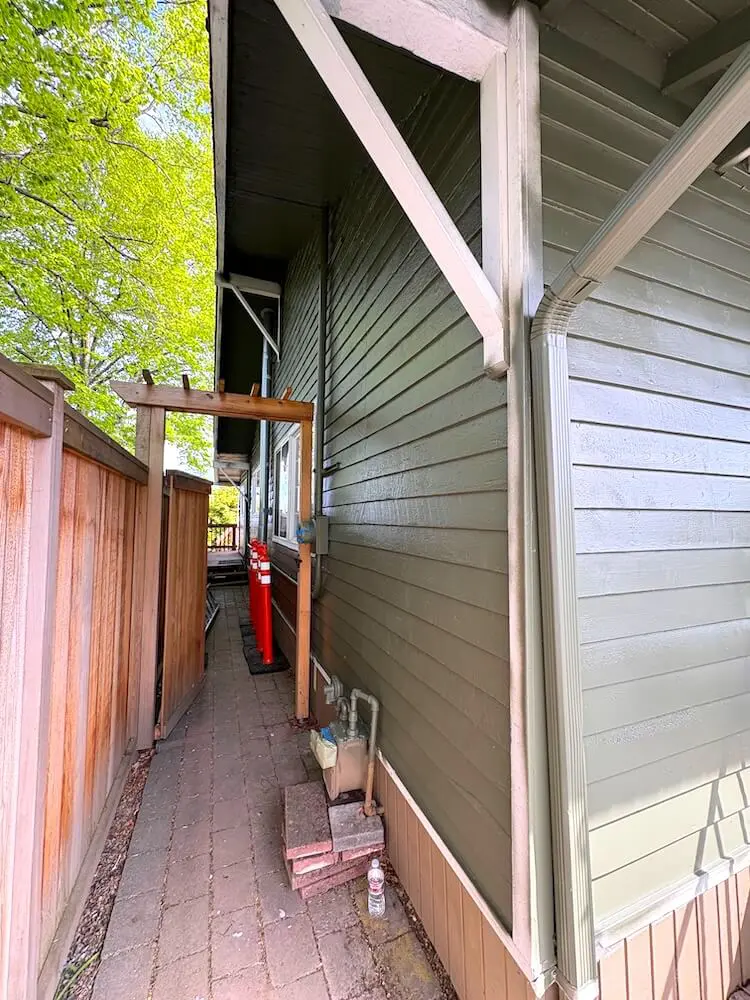
The house that came out the other side is the same house, which was the whole point.
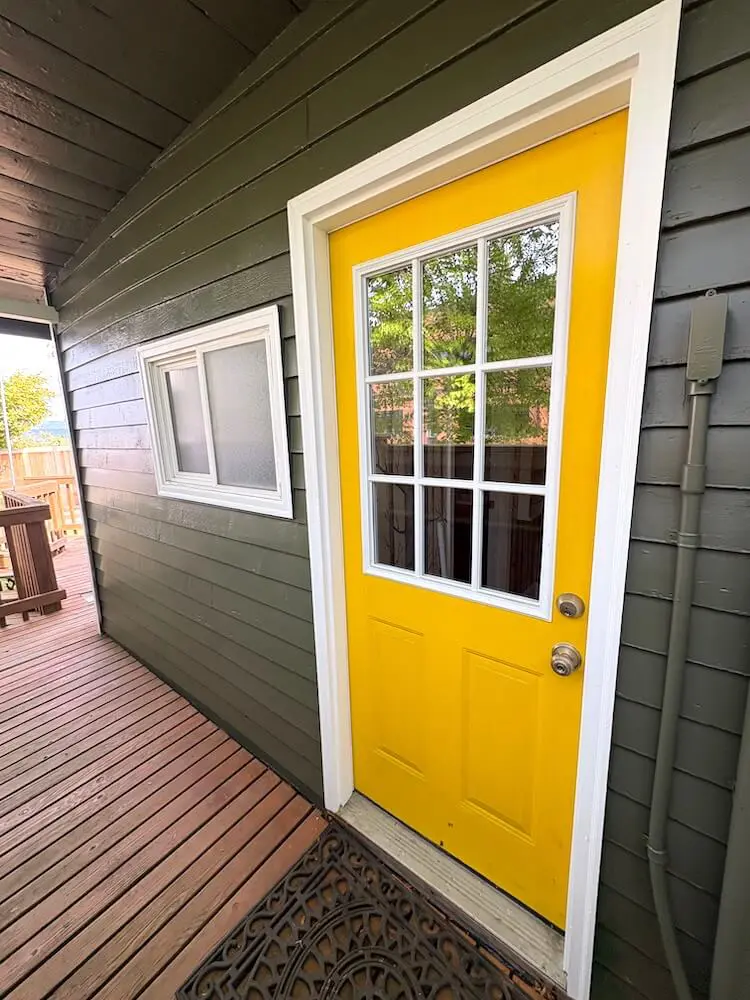
The green siding is still green. The yellow door is still yellow. What's gone is the peeling, the chalking, the faded downspouts, and the worn edges that had been dragging the whole exterior down.
Clean lines at the trim, consistent color across every surface, and an elevation that reads as cared for instead of overdue.
Keeping the palette was a deliberate call, and it came from the homeowners. They'd told the crew that the green siding and the yellow front door reminded them of the Oregon Ducks, and that the color combination was part of why they'd bought the house in the first place.
That's not a detail you find on a work order unless somebody asks and somebody listens.
It would have been easier to default to a fresh, neutral, market-friendly palette. Plenty of contractors would have suggested it, and plenty of sellers would have gone along. But this house had a character its owners had chosen on purpose, and the paint wasn't what was wrong with it. The finish was. Restoring the colors instead of replacing them kept the thing they valued and fixed the thing they'd called about.
The work wrapped May 4, 2026, in time for the May listing. The homeowners got a house ready for photos, a buyer-facing exterior with no obvious deferred maintenance, and one fewer thing standing between them and their move.
If your own exterior is heading the same direction, and especially if your home predates 1978 or you're working against a listing date, the useful move is to start the conversation earlier than feels necessary. Prep on an older home takes longer than most people expect, and the calendar is usually the tightest constraint on the job. Call (425) 635-8640 or request a quote and we'll walk your exterior with you.
What Our Client Said
★★★★★
Solid experience, prompt and good communication and a professional job done.