
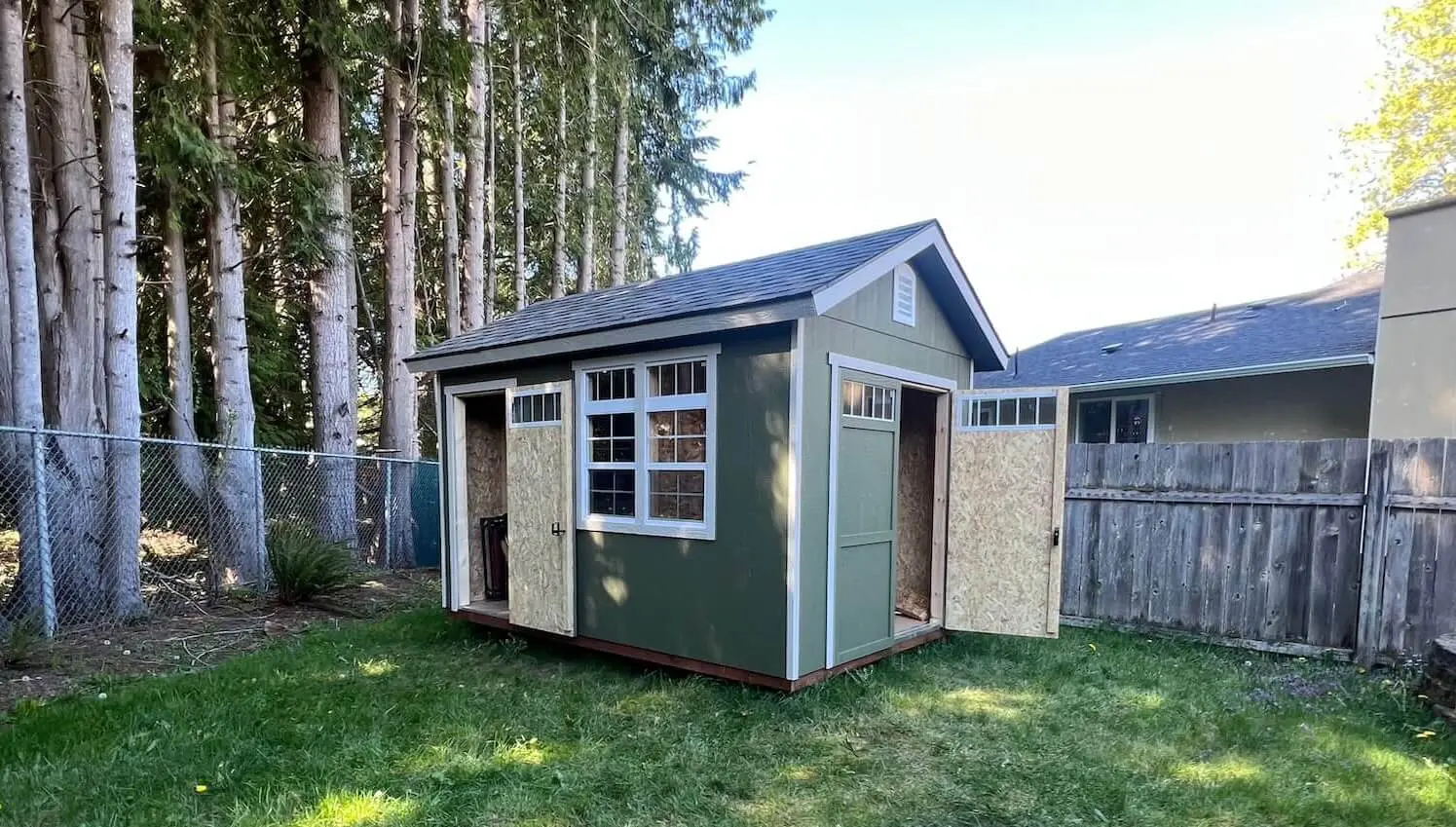
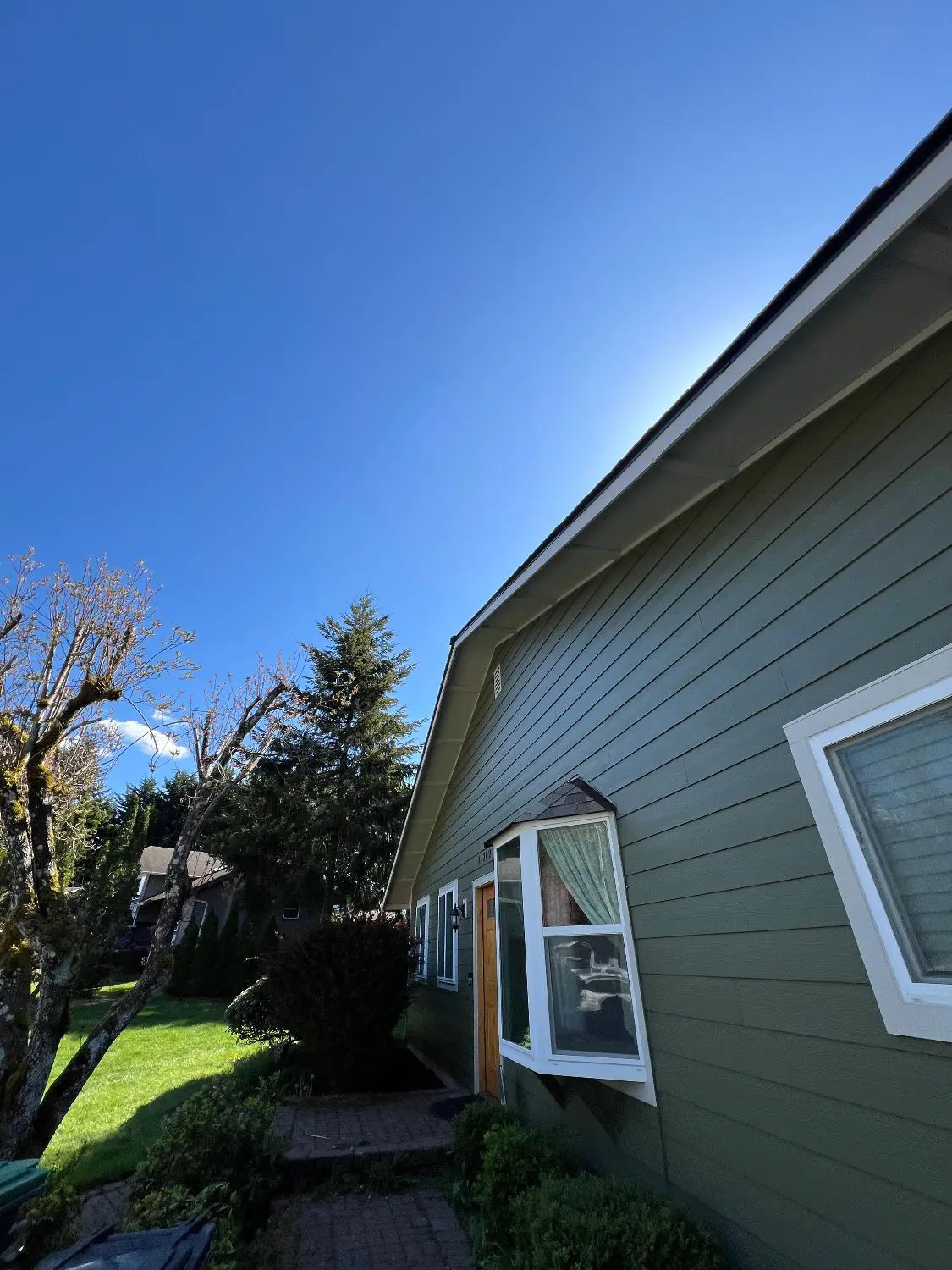
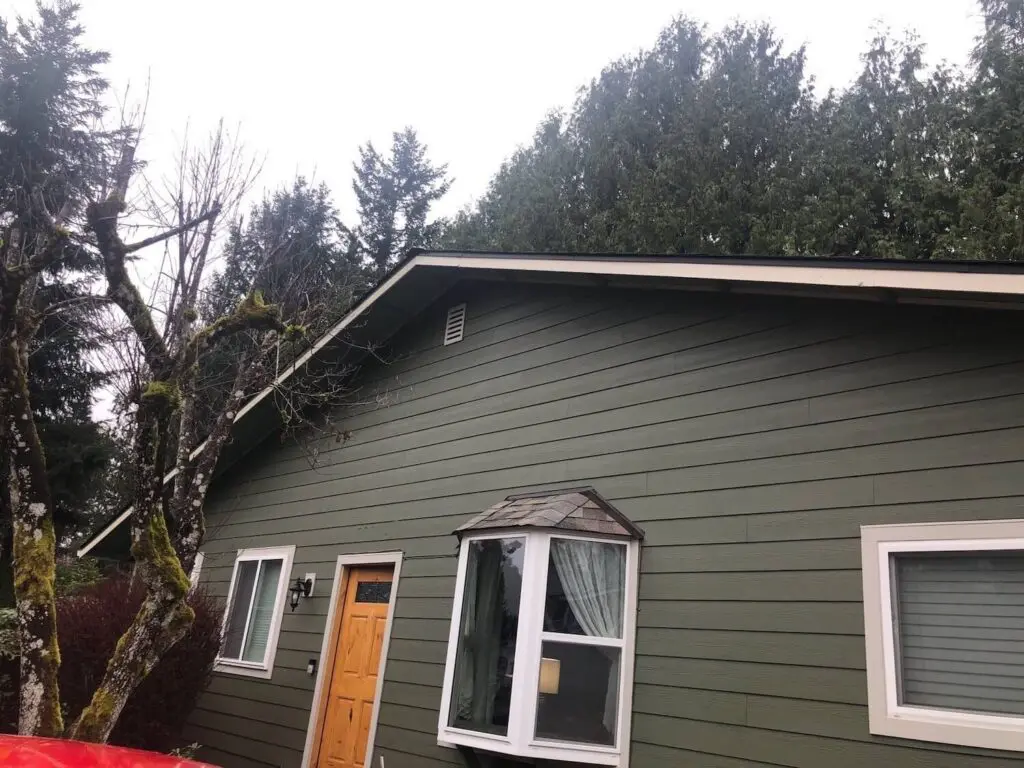
The Before
New siding solves one problem and quietly creates another.
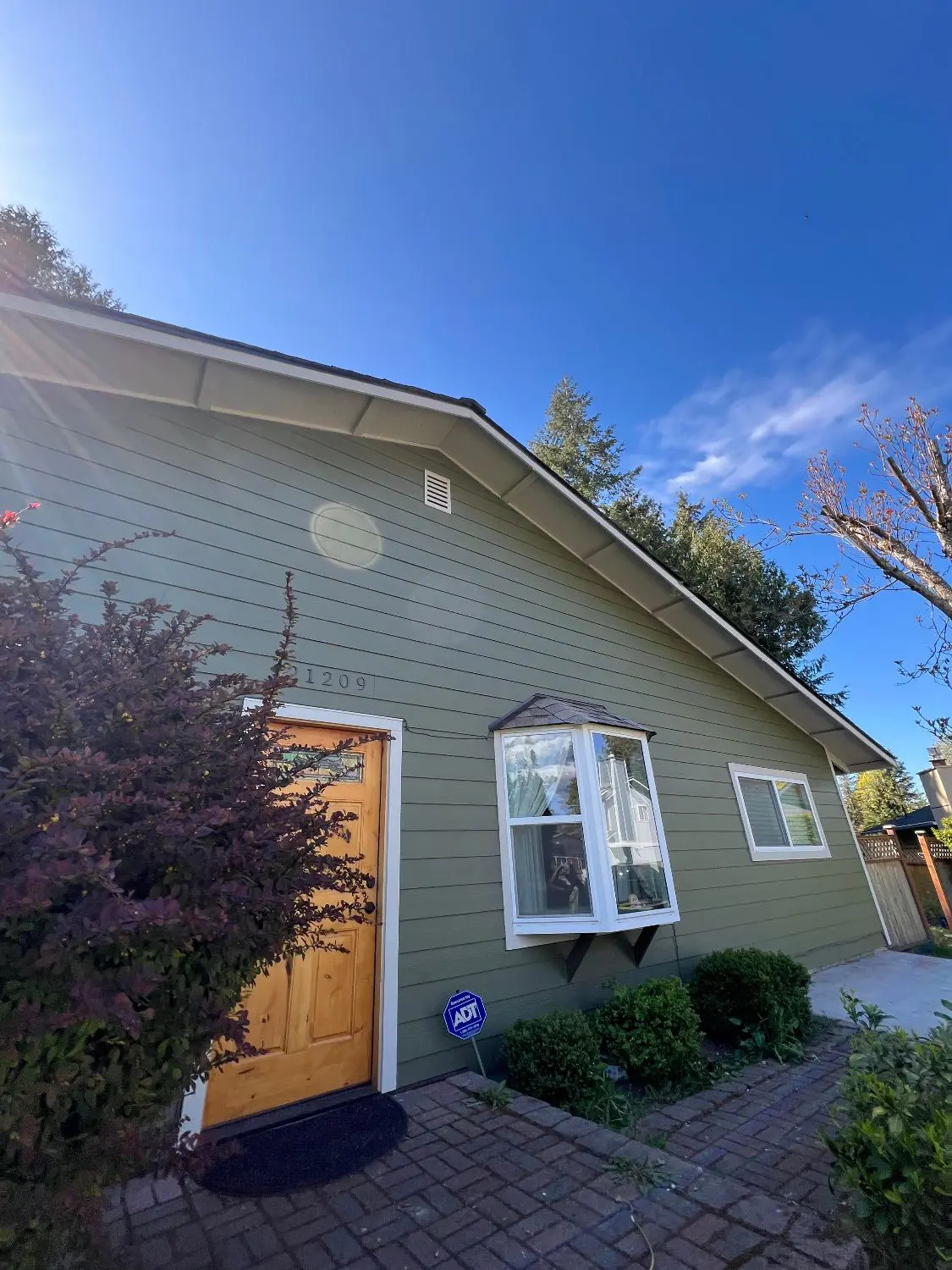
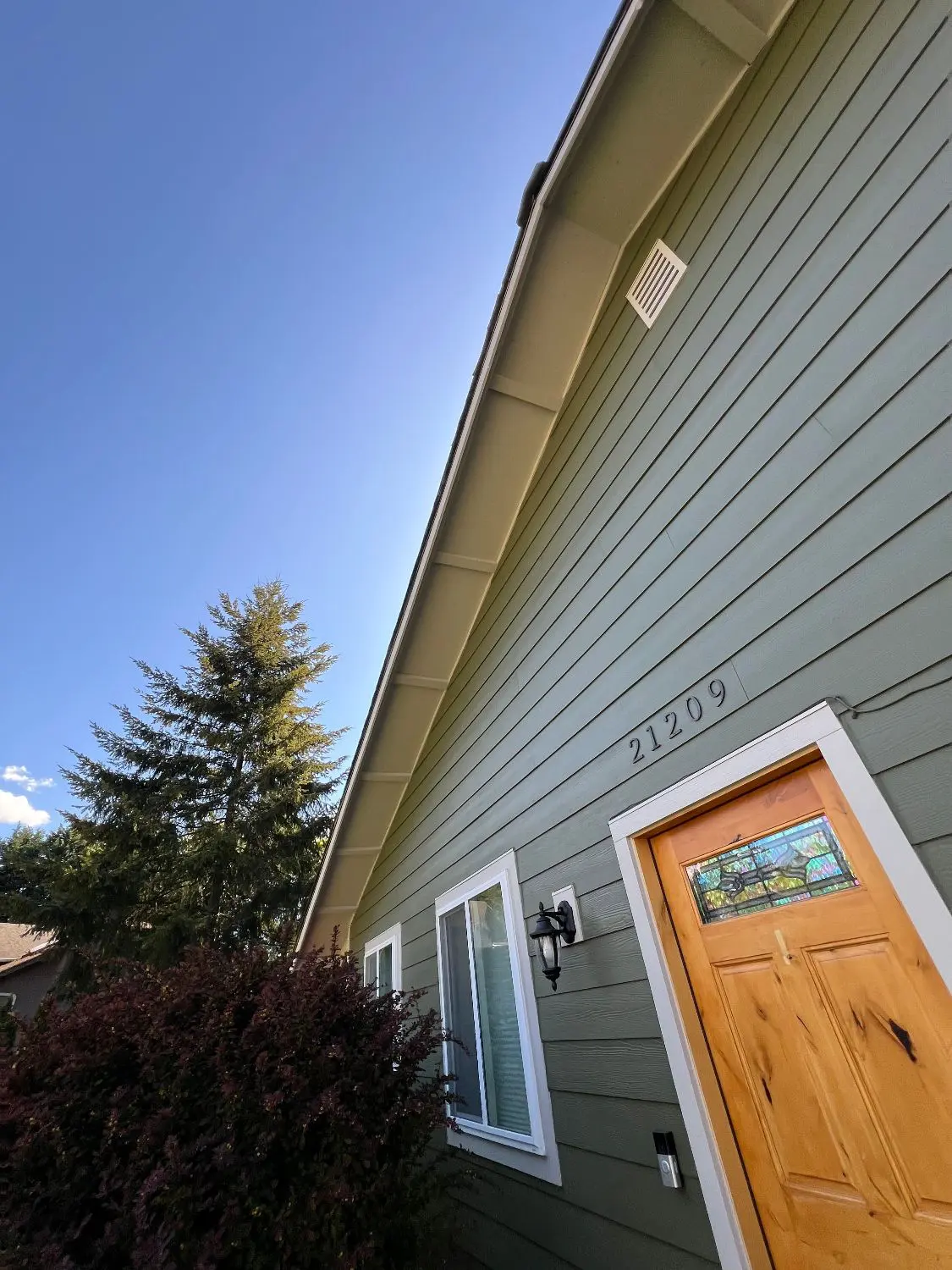
Sharon had hers replaced, and the siding itself came out exactly the way it should have. The trouble showed up in everything the siding crew didn't touch. Soffits, fascia, the area around the chimney and eaves, the downspouts, the meter conduit: all of it was still wearing the old color, and next to fresh siding, the old color looked older than it ever had before.
That's the part people don't see coming. A worn finish blends in fine as long as everything around it has aged at the same rate. Put a clean new surface beside it and the contrast does the work for you.

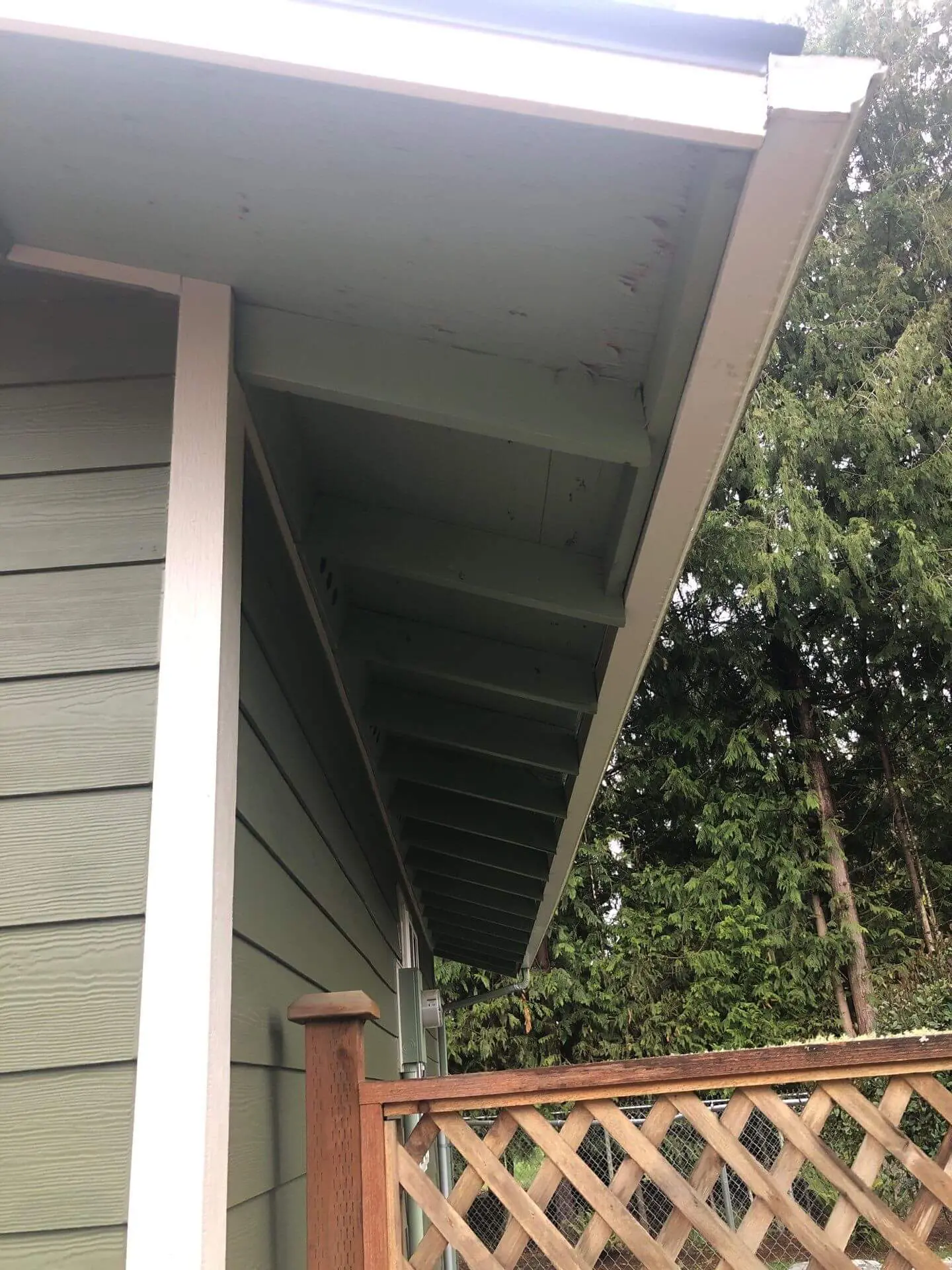
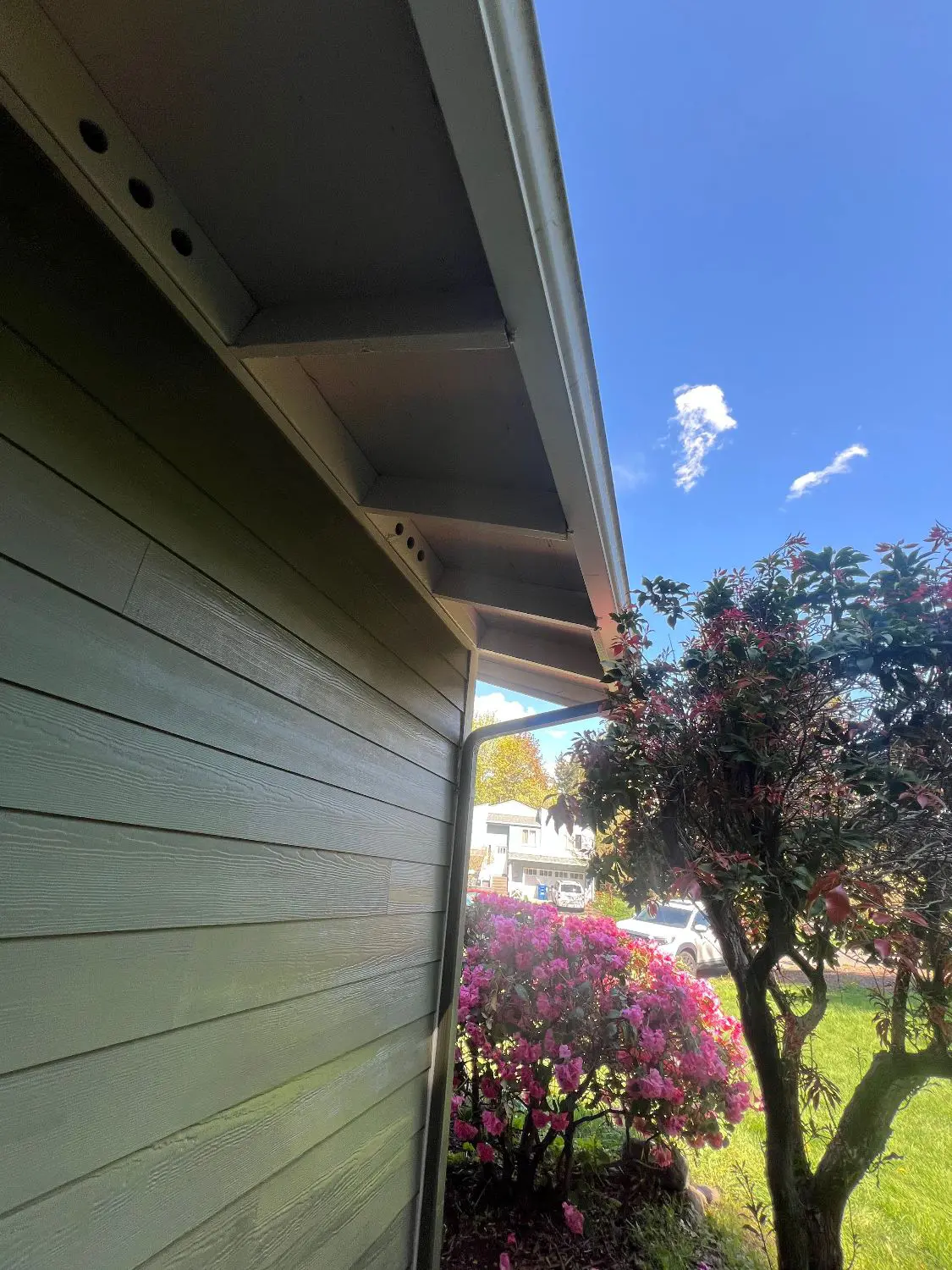
Suddenly the downspouts look like they were borrowed from a different house. The conduit running up the wall stops being invisible and starts being the first thing your eye lands on.
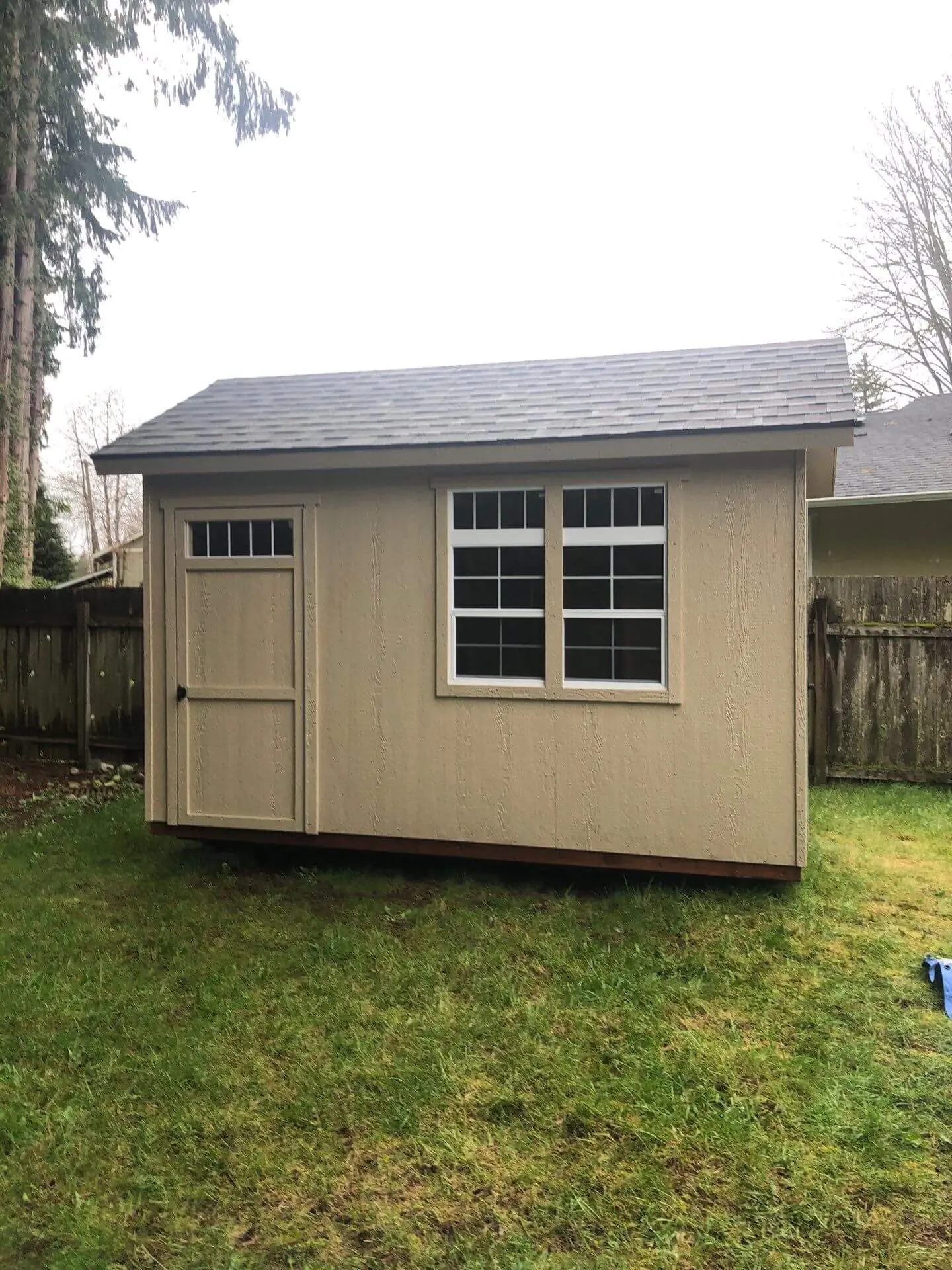
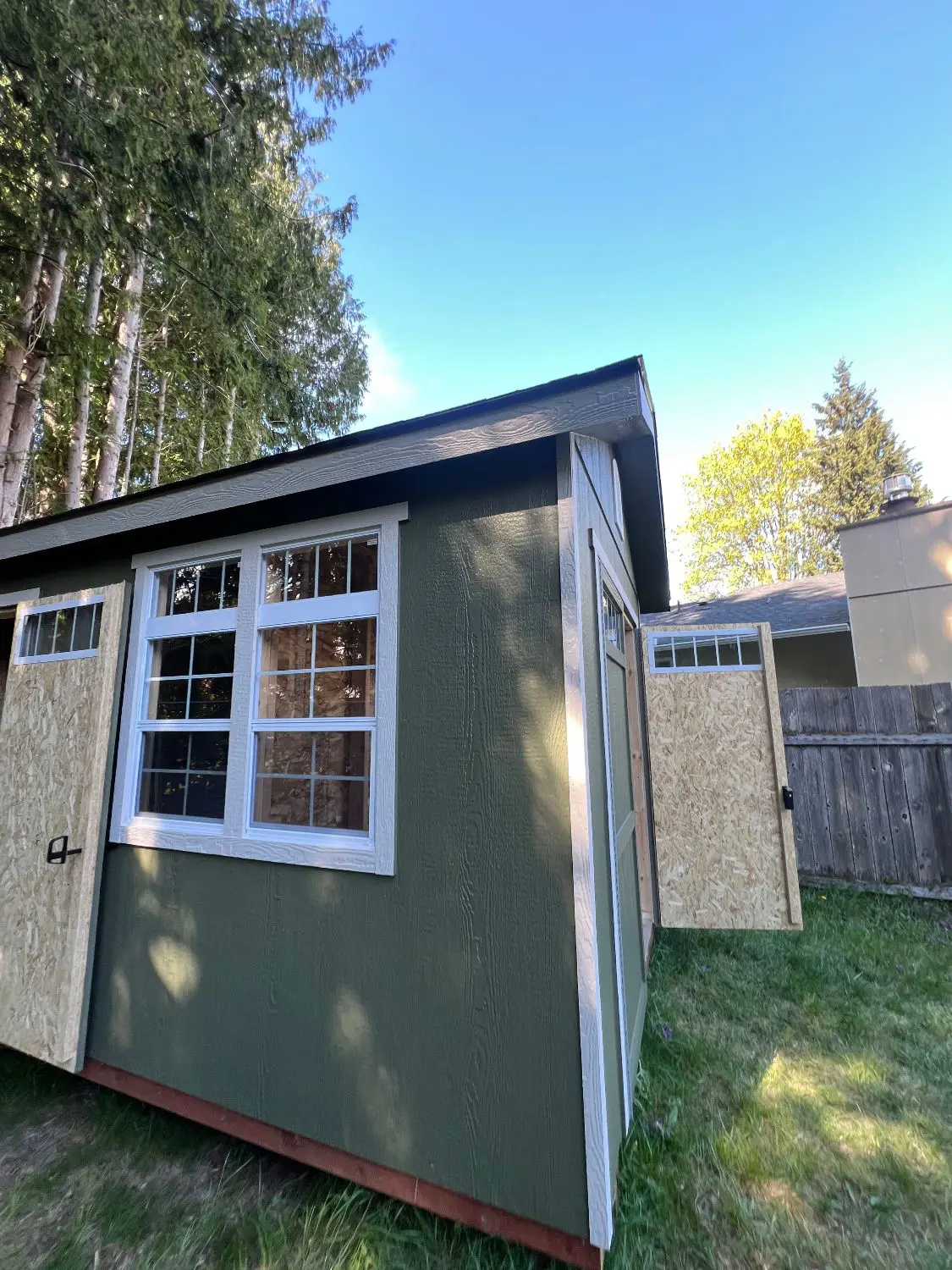
Out back, the shed had the same issue on a larger scale. It didn't match the new siding, and it hadn't matched the old house particularly well either. From the yard, the property read as two separate buildings that happened to share an address.
Sharon already knew what working with Equipped looked like. She'd hired the crew before for a smaller interior job, drywall repair and paint tied to windstorm damage, so this wasn't a cold start. She knew who she'd be dealing with, and she called back with a clear picture of what needed fixing.
The Problem
The scope was easy to describe and harder to execute: bring every mismatched surface on the property into agreement with siding that had already been installed.
That's a color matching job before it's a painting job, and the distinction matters. On a normal repaint you're choosing colors. Here the color was already decided, sitting on the wall, manufactured by someone else, and every surface being painted had to land close enough to it that nobody would ever notice the seam between new siding and new paint. Miss by a little and you haven't fixed the mismatch. You've just moved it.
The surface list ran across the whole property:
- Chimney and eave areas
- Soffits
- Fascia
- Downspouts
- Meter conduit
- The detached shed
Each of those sits in different light and takes paint differently. Soffits live in permanent shade. Fascia catches direct sun most of the day. Downspouts and conduit are metal, not wood, so they need different handling to hold a coating at all. A color that reads correct on a sunlit fascia board can go noticeably cool once it's tucked up under a soffit. Getting a match that holds across all of them takes more than pulling one chip and trusting it.
The shed needed to come along with the house. Leaving it alone would keep the property looking unfinished.
Sharon also raised something practical before the crew ever arrived. She had outdoor furniture and belongings around the house and yard, and she wanted to know how that was going to be handled so nothing ended up in the way, damaged, or stacked somewhere inconvenient for three days. It's a small thing on paper and a large thing when you're the one living there. Plenty of exterior jobs go sideways not because of the paint but because nobody thought about the patio set until the morning of day one.

The Solution
Mauricio managed the job and took on the color matching himself, which is the piece the whole project hinged on.
Matching to installed siding means working from the actual material in the actual light on the actual house, not from a fan deck on a kitchen counter. Manufactured siding color and mixed paint color don't behave identically. Sheen differs, substrate differs, and the way each one holds light at different times of day differs. The match has to be judged where it's going to live.
Mountain Sage and Cobblestone are the siding manufacturer's colors, not stock paint colors, so there was no chip to pull. Mauricio color-matched both on site using Sherwin-Williams SuperPaint Exterior, checking the mix against the installed siding in the light it actually sits in. That's what lets the painted surfaces sit with the siding instead of reading as leftovers somebody tried to hide.
SuperPaint Exterior was carried across every surface, including the metal ones. Downspouts and meter conduit are the pieces most likely to get skipped or given a quick pass, and they're also the pieces that give away a rushed job, because they run vertically down the middle of a wall where nobody can miss them.
Two things make a siding match harder than it sounds. The first is sheen. Manufactured siding typically carries a low, flat-ish finish baked in at the factory, while exterior paint is mixed to a chosen sheen that reflects light differently even at an identical color. A perfect color match at the wrong sheen still reads as two materials. The second is that siding color is rarely a stock paint color. It's a manufacturer's formulation, so you're matching toward it rather than pulling its name off a list, and the closer you need to sit to it, the more the judgment call happens on site instead of in the store.
Metal surfaces needed their own attention. Downspouts and conduit are smooth, non-porous, and often already coated from the factory, which means paint has very little to grab unless the surface is cleaned and prepped for it first. Coating them the same way you'd coat wood trim gets you a finish that looks right on day one and starts peeling in sheets the first time the temperature swings. Getting adhesion on those pieces is what keeps the match from unraveling in a year, which matters more here than on a standard repaint, because the whole point of the project was consistency.
Gary and a second technician handled application on both the house and the shed, working them together rather than treating the shed as a follow-up visit. Three days from start to finish for the full property. Touch-ups were walked and addressed after the main work was done, which is the step that turns a job that's finished into a job that's actually finished. Coverage looks complete from twenty feet on day three. It's the walk-around afterward that catches the thin spot behind the downspout bracket and the edge under the eave that needs one more pass.
Before & After
The After
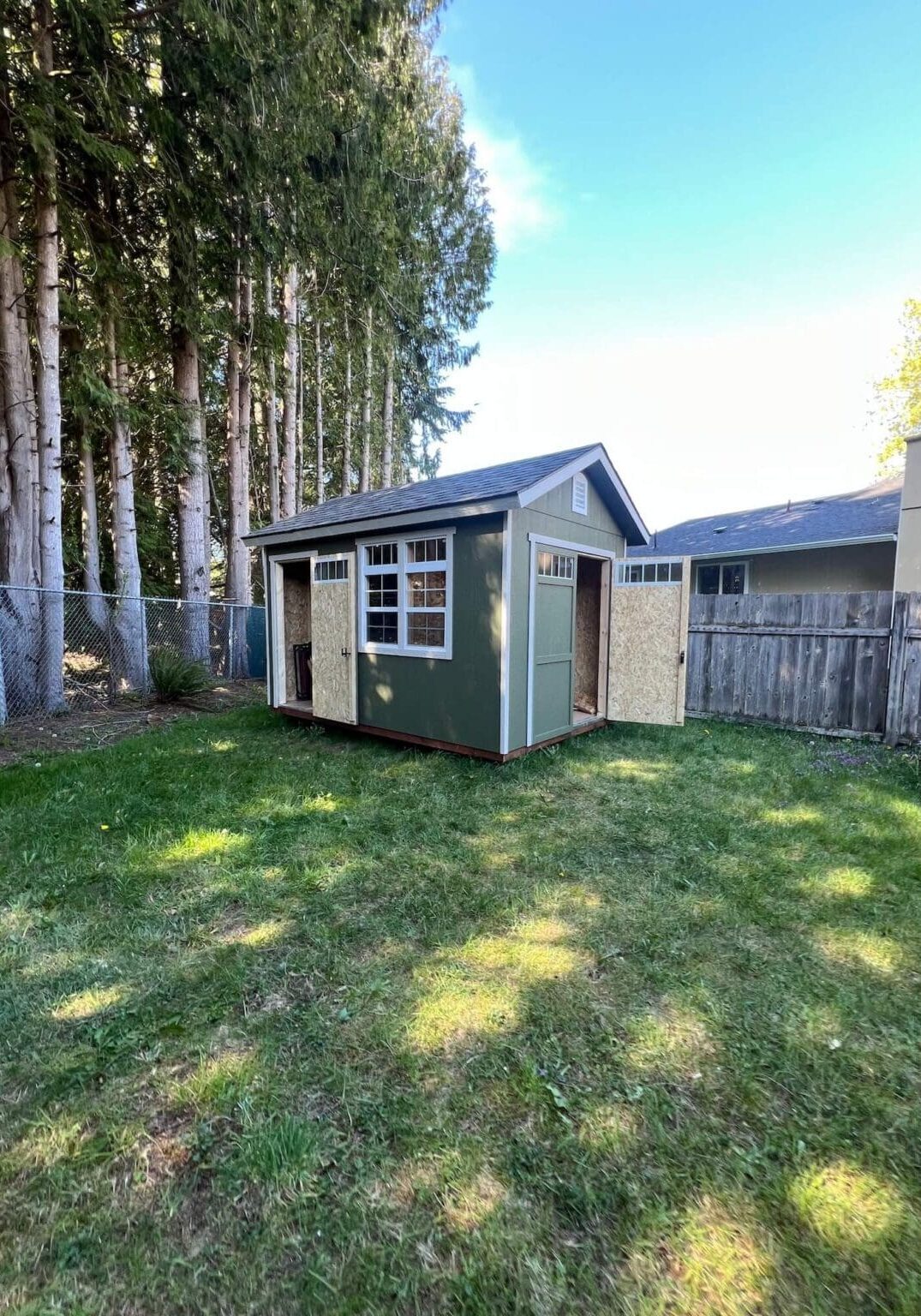
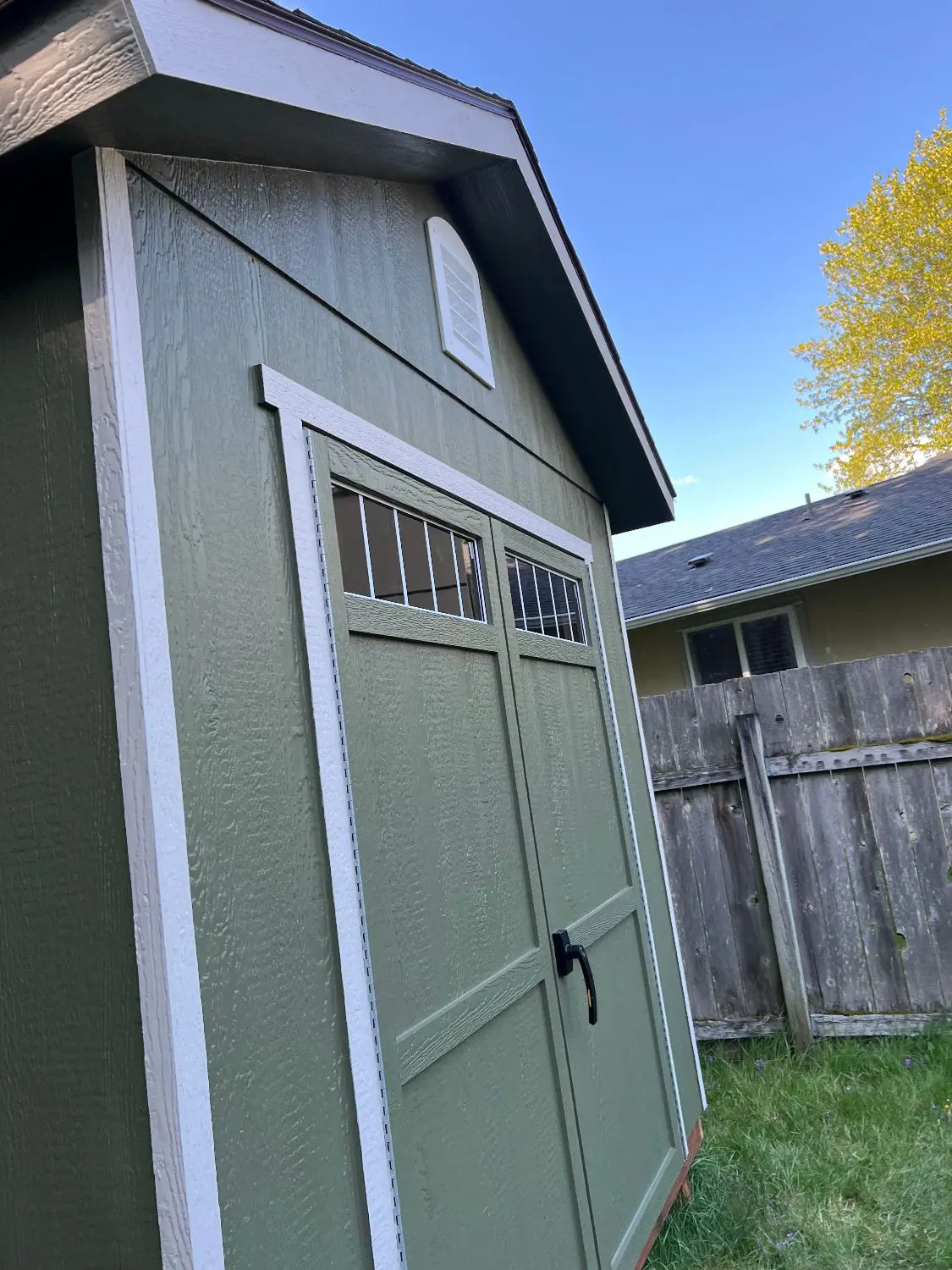
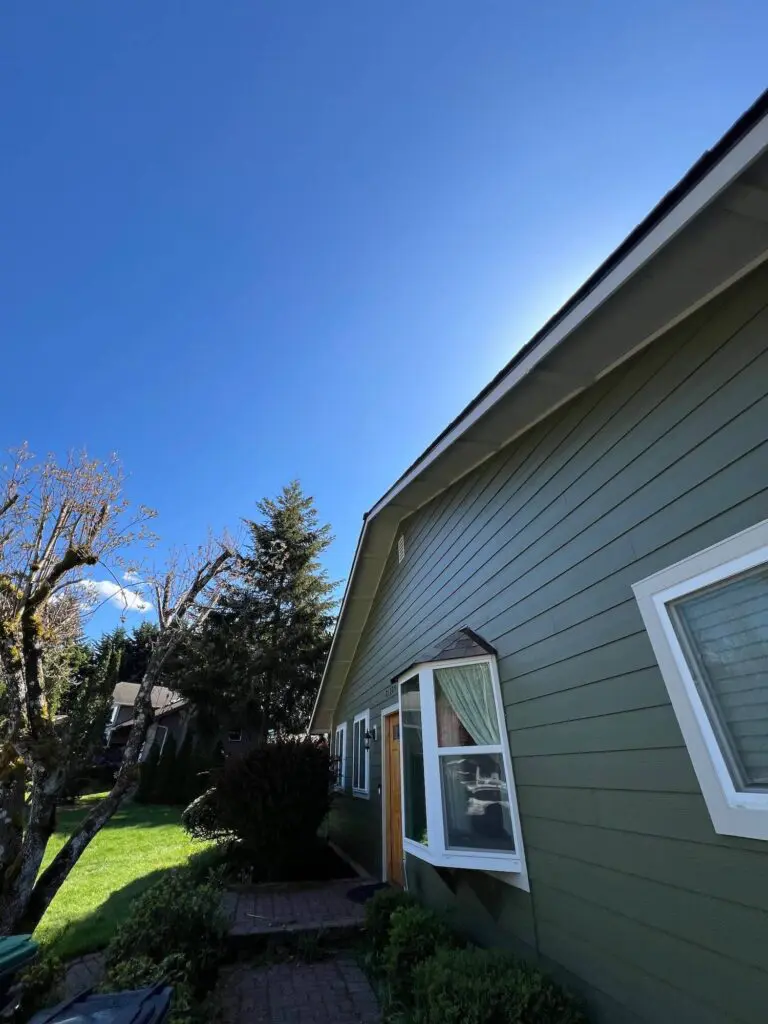
The house and the shed now read as one property.
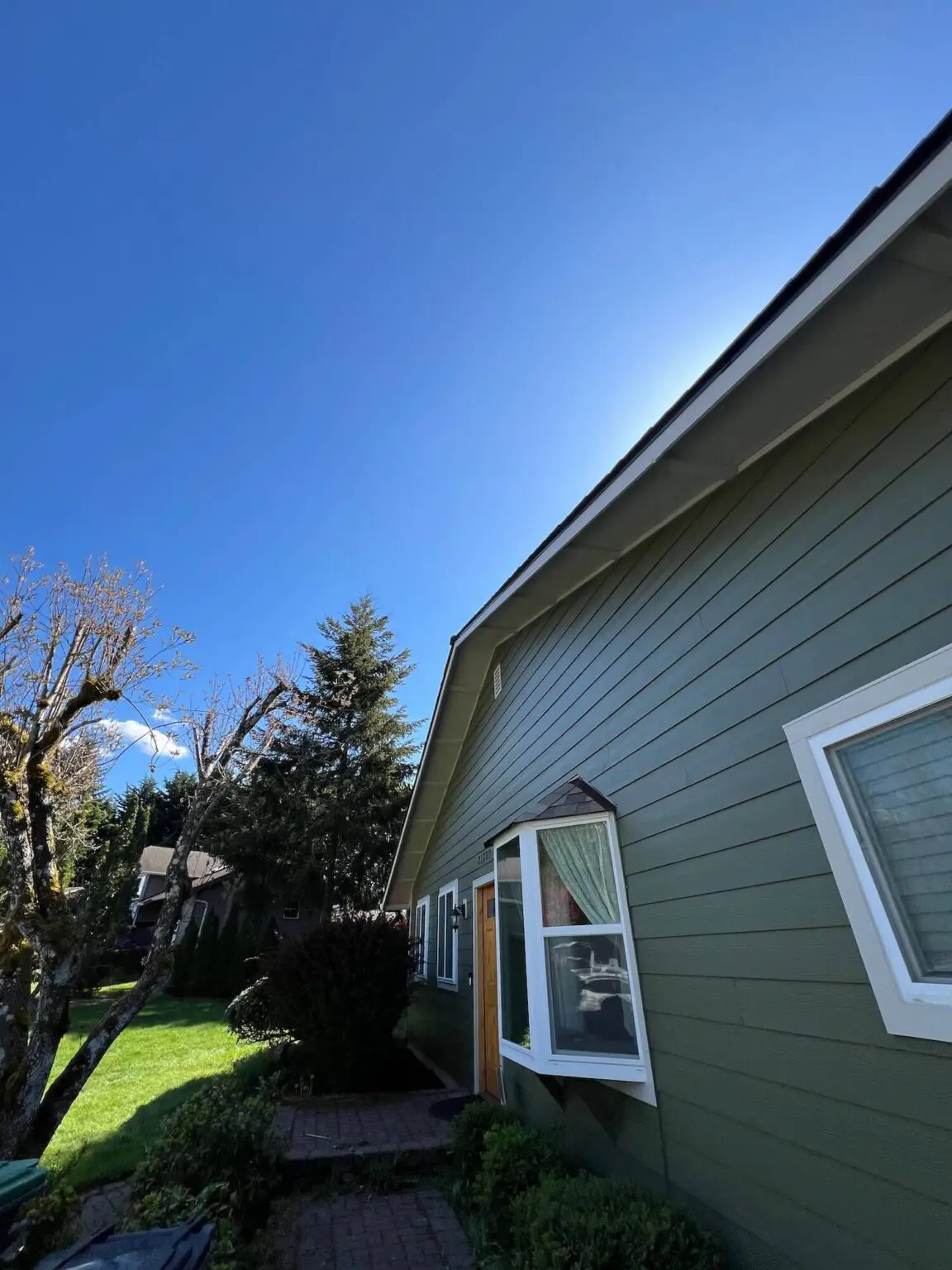
The soffits, fascia, chimney and eave areas, downspouts, and meter conduit all sit correctly against the new siding, so the eye moves across the exterior without catching on anything. The home's siding and soffit colors were color-matched onto the shed, so the two buildings match and the shed no longer announces itself from across the yard. Nothing about the finished exterior says that part of it was replaced and the rest of it was painted afterward, which is exactly the outcome you want from this kind of work. Good color matching is invisible by definition. You notice it only when it fails.
For Sharon, the result is a property that looks finished rather than partially updated. New siding did most of the heavy lifting on the house itself. The paint is what let that investment actually land, instead of sitting next to five surfaces that undercut it.
She left a five-star Google review afterward and said she'd recommend the crew to friends and family, which carries more weight coming from a repeat customer than from a first-time one. She'd already seen how the interior job went before she called about this.
Worth knowing for anyone in the same position: a match like this holds as long as the two surfaces age at a similar rate, and they mostly will, but they won't do it identically forever. Siding and paint weather on their own schedules, and full sun exposure moves both faster than shade does. The gap tends to open slowly enough that you'd never notice it year to year. Keeping the painted surfaces clean, clearing debris out of gutters so water isn't running down fascia and downspouts constantly, and getting to any chipped or scraped spots early all buy time before anything needs revisiting.
If you've just had siding, windows, or a roof replaced and the rest of your exterior suddenly looks a decade behind, that's the same situation. It's worth fixing while the new material is still new, and it's worth having someone match to the installed product on site rather than guessing from a color chip. Call (425) 635-8640 or request a quote and we'll come look at what's not matching.
What Our Client Said
★★★★★
Equipped Painting services are amazing!! I had new siding put in, and needed extra help painting the areas that did not match the siding color. Mauricio was managing the work and checking in as needed. He was also able to match the colors of the siding. Gary, along with another technician, was able to finish the house, and my shed, in three days. I would recommend Equipped Painting to friends and family!