
How Often to Stain a Deck in Renton’s Rainy Climate
Most homeowners in Renton know their deck needs staining at some point. What most don’t know is exactly when that point is or how quickly the climate here moves them toward it.
National maintenance guides tend to suggest restaining every two to three years. For a deck in Renton, that number can be optimistic. The rain, the overcast stretches, and the limited drying time between wet periods put more pressure on deck stain than most general guidelines account for.
This covers what a realistic restaining timeline looks like in the Pacific Northwest, what Renton’s specific conditions do to that timeline, the factors that shift it in either direction, what the prep and cost side of the process actually involves, and the signs a homeowner can watch for that tell them it’s time.
How Often Should You Stain Your Deck in Renton, WA
Under typical conditions, most wood decks need restaining every two to three years. That’s the national baseline, and it holds up reasonably well in drier climates with consistent sun exposure and low annual rainfall.
In the Pacific Northwest, the baseline shortens. For decks in Renton with significant weather exposure, restaining every one to two years is common. Annual inspection is the minimum. Some decks in particularly exposed or shaded situations need attention every season.
That’s not a reason to panic. It’s a reason to pay attention. The timeline isn’t fixed for every deck, and the rest of this covers what determines where a specific deck falls.
How Renton’s Climate Shortens That Timeline
Deck stain works by forming a protective barrier between the wood and the elements. In a climate with warm summers and dry falls, that barrier gets a chance to do its job without constant pressure. Renton doesn’t offer that.
The rain is the obvious factor. Sustained, repeated moisture exposure breaks down the stain barrier faster than the same total rainfall spread across fewer, heavier events followed by dry periods. Renton averages around 37 inches of rain per year, spread across most of the calendar. The deck rarely gets a long enough break to fully recover between wet stretches.
Limited sun compounds the problem. Sun dries decks out after rain events and helps the wood and stain surface recover. During Renton’s overcast seasons, decks stay damp longer. That extended moisture contact accelerates stain degradation and creates conditions where mold and mildew can begin forming beneath the surface before any visible signs appear on top. That same overcast stretch is also why many homeowners time deck staining alongside the seasonal prep we recommend for spring exterior painting, when drier windows are easier to plan around.
Factors That Affect How Long Deck Stain Lasts
Climate sets the baseline, but individual deck conditions determine where a specific deck actually lands. Two decks a few streets apart in Renton can have meaningfully different timelines based on the following.
Sun Exposure and Deck Orientation
Orientation is one of the most significant factors in stain longevity. A deck with full southern exposure dries faster after rain events and tends to hold stain longer. A north-facing deck may stay damp for days after a heavy rain, with little sun to accelerate drying.
Shaded decks present a similar challenge. Tree canopy and roof overhangs block the sun that helps decks dry out, which means:
- Moisture sits on the surface longer
- Stain breaks down faster in the wet zones
- Mold and mildew have more opportunity to take hold
A deck that rarely fully dries between rainy stretches is working against its stain from the start.
Wood Type
The material the deck is built from affects how stain absorbs, adheres, and holds up over time.
- Cedar is the most common decking material in the Pacific Northwest. It accepts stain well and holds it consistently when maintained on a regular schedule.
- Pressure-treated lumber is denser and less absorbent, which can extend stain life. It also needs to be fully dried out before stain will properly adhere, which affects timing around new builds or replacements.
- Hardwood decking holds stain longer than cedar or pressure-treated pine but is less common in this region.
- Older or weathered wood absorbs stain unevenly, which can mean more frequent attention to maintain consistent surface protection.
Stain Type
Not all deck stains perform the same way, and the original stain choice affects how the deck ages and what it looks like when it starts to fail.
- Solid stains form a film over the wood and provide strong UV and moisture protection. When they fail, they peel rather than fade, which means more prep work before the next coat can go on.
- Semi-transparent stains penetrate the wood rather than coating it. They wear more gradually and are easier to recoat, but they offer less moisture protection over time.
- Clear or natural finishes offer the least protection of any option. In a climate like Renton’s, these often need reapplication annually.
If you’re deciding between a warm cedar tone and something cooler, the same considerations that shape paint color trends for Washington homes apply to picking a stain shade that works with your house’s exterior.
Deck Traffic and Use
A deck that functions as a year-round outdoor living space takes more wear than one that goes mostly unused through the winter months.
High-wear zones show stain failure first:
- Stair treads
- Entry points from the house
- Areas under outdoor furniture where moisture gets trapped and air circulation is limited
Uneven wear across the deck surface is common, and it means some sections may need attention before the deck looks like it needs a full restaining.
What Deck Staining Prep Actually Involves
Staining a deck isn’t just applying a new coat over the old one. The condition of the wood underneath determines how well any stain will hold, and skipping the prep work is one of the most common reasons a fresh stain job fails early.
A proper assessment starts with a walkthrough of the deck, not just a quick look from the yard. That means checking board by board for soft spots, checking fasteners and structural connections, and identifying any areas where the old stain has already failed or where moisture has gotten into the wood. Catching a repair need before staining starts means it gets handled as part of the project instead of becoming a surprise halfway through.
Once the assessment is done, the deck typically goes through a professional pressure washing service to remove dirt, mildew, and any loose or failing stain. Depending on the condition of the surface, that might mean a gentle pressure wash or a chemical stripper for stubborn old coatings. Sanding follows on rough or splintering areas to give the new stain an even surface to bond to.
Any repairs, whether that’s a loose board, a cracked plank, or a section with early rot, need to happen before staining, not after. Applying stain over a problem doesn’t solve it. It just hides it until it gets worse.
Drying time matters more in Renton than almost anywhere else. Wood needs to be fully dry before stain will adhere properly, and Renton’s damp air means that window can take longer to hit than homeowners expect. Rushing this step is one of the most common causes of early stain failure, since stain applied to wood that hasn’t fully dried won’t bond the way it should.
What Affects the Cost of Deck Staining in Renton
There’s no single price that applies to every deck, because the work involved in deck staining and refinishing varies a lot from one project to the next. A few factors typically come up in any estimate.
- Deck size. More square footage means more material and more labor time, in a fairly direct relationship.
- Current condition. A deck that needs washing, sanding, and minor repairs before staining takes more time than one that’s already in good shape.
- Wood type. Cedar, pressure-treated lumber, and hardwood all take stain differently, which can affect both product choice and application time.
- Stain type. Solid, semi-transparent, and clear finishes have different application processes and different levels of prep sensitivity.
- Accessibility. Multi-level decks, tight side yards, or decks with a lot of railing and detail work take longer than a simple, open, single-level deck.
Because these factors vary so much deck to deck, the most accurate way to understand cost is a walkthrough and estimate rather than a general number. That’s also the point where any repair needs get identified before they turn into a bigger job.
Signs Your Renton Deck Needs Restaining
Rather than tracking the calendar, the deck itself gives clear signals when the stain is failing. These are the signs worth watching for.
Water soaks in rather than beads. Fresh stain causes water to bead on the surface and roll off. When water absorbs into the wood instead, the barrier is gone. This is the simplest and most reliable test: pour a small amount of water on the deck. If it soaks in within a few minutes, it’s time to restain.
Visible graying or color fading. Stain gives wood its color and protects it from UV. When the surface shifts toward gray or silver, the protective layer is thinning. Graying is natural wood weathering, and it means the wood is no longer fully protected.
Mold, mildew, or black discoloration. Dark patches or black staining on the surface signal that moisture is sitting on or in the wood long enough for growth to establish. This isn’t just a cosmetic issue. It means the stain is no longer doing its job.
Peeling or flaking. This is specific to solid stains and indicates the film has failed. Peeling means the surface needs to be properly stripped and prepped before any new stain will bond correctly.
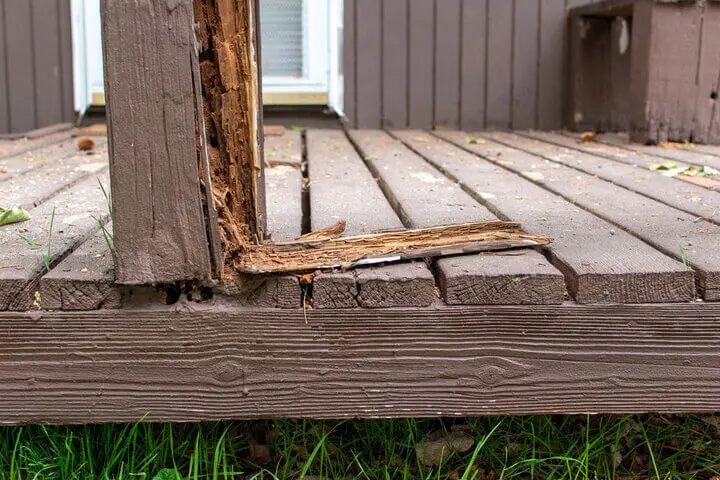
Soft, spongy, or cracked boards. This is the most serious sign on the list. When boards feel soft underfoot or show visible cracking, moisture has already penetrated the wood. This warrants professional attention before any staining work begins.
When to Call a Professional for an Assessment
In Renton, there is no single answer to how often a deck needs restaining. The climate creates a shorter baseline than most parts of the country, but the actual timing depends on the deck’s orientation, wood type, stain history, and how much use it sees.
What a professional looks at isn’t just the age of the last stain job. It’s the current condition of the surface. That means checking whether the existing stain is still offering any protection, whether moisture has penetrated the wood, and what prep work is needed before a new coat will adhere properly.
If any of the signs above are showing up on your deck, or if it has been more than a year or two since the last restaining, an estimate is the right next step. We assess deck conditions throughout the greater Seattle area and give homeowners a clear picture of where their deck stands and what it needs. Contact us today to schedule your estimate.